‘If you’re not using AI, you’re falling behind’.
You’ve probably heard that phrase more times than you can count. AI tools are everywhere. Product managers can design, write code and create working prototypes in minutes.
The productivity improvements are real. But there are hidden costs to your team’s health.
AI can leave creative teams behind
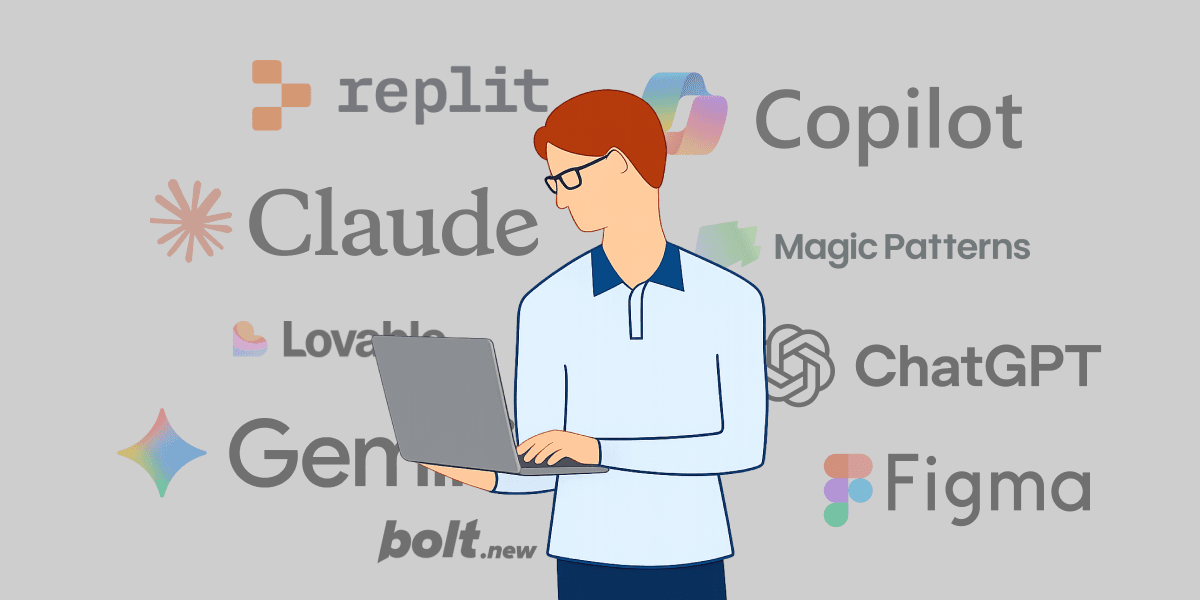
AI gives product managers new powers. You can create polished mock-ups without opening Figma.
That sounds great. But think about how that feels for the designers on your team.
If you show a design that looks finished, designers can feel like they are being brought in too late. Their role changes from solving problems to giving approval to decisions that have already been made.
That can affect job satisfaction and stifle creativity.
AI prototypes are not products
Product managers can build impressive AI prototypes without writing code.
They are brilliant for testing ideas with users. You can learn quickly and avoid building the wrong thing.
But a prototype that looks production-ready is not the same as production-ready software.
There are security concerns, accessibility issues, missing edge cases and technical debt hidden beneath the surface.
Think twice before showing these prototypes to senior leaders. A slick demo can create false expectations. People may assume the product is nearly ready to launch when it is really just an experiment.
Not every feature needs AI
AI is not free.
Token costs add up. Running large models can become expensive, especially when usage grows.
At some point the hype will settle and prices will come down. Until then, product teams should ask an important question:
‘Does this feature solve a real problem, or are we adding AI because everyone else is?’
Some AI features create genuine value. Others are just expensive vanity projects.
AI is unpredictable
Generative AI systems are typically non-deterministic. Give the same prompt twice and you may get different answers.
That is fine for brainstorming or creating first drafts. It is less fine when users expect the same result every time.
Not everything needs AI. In many cases, simple rules and traditional software work better.
Why I still love using AI
Reading this, you might think I am against AI. I’m not. I love using it.
AI has given me the confidence to ask questions I might have been embarrassed to ask designers or engineers. It has helped me learn faster and explore ideas without worrying about looking silly.
I think of AI as a very smart person to pair with. Someone to bounce ideas around with.
But I don’t treat it as the expert in the room.
The funny thing about AI mistakes is that you notice them straight away when you’re an expert. When you’re new to a topic, they are much harder to spot.
The best product managers won’t be the ones who use AI to do everyone else’s job. They’ll be the ones who use AI to help everyone do their best work.